Electro-acupuncture for neuropathy: how it works and who it helps
If medications haven't reached your neuropathy, electro-acupuncture may be one of the few treatments that does. Here's how it works, what the research shows, and who tends to respond best.

Dr. Perry Levenson, DACM, L.Ac.Apr 20, 2026
Updated Oct 01, 2026
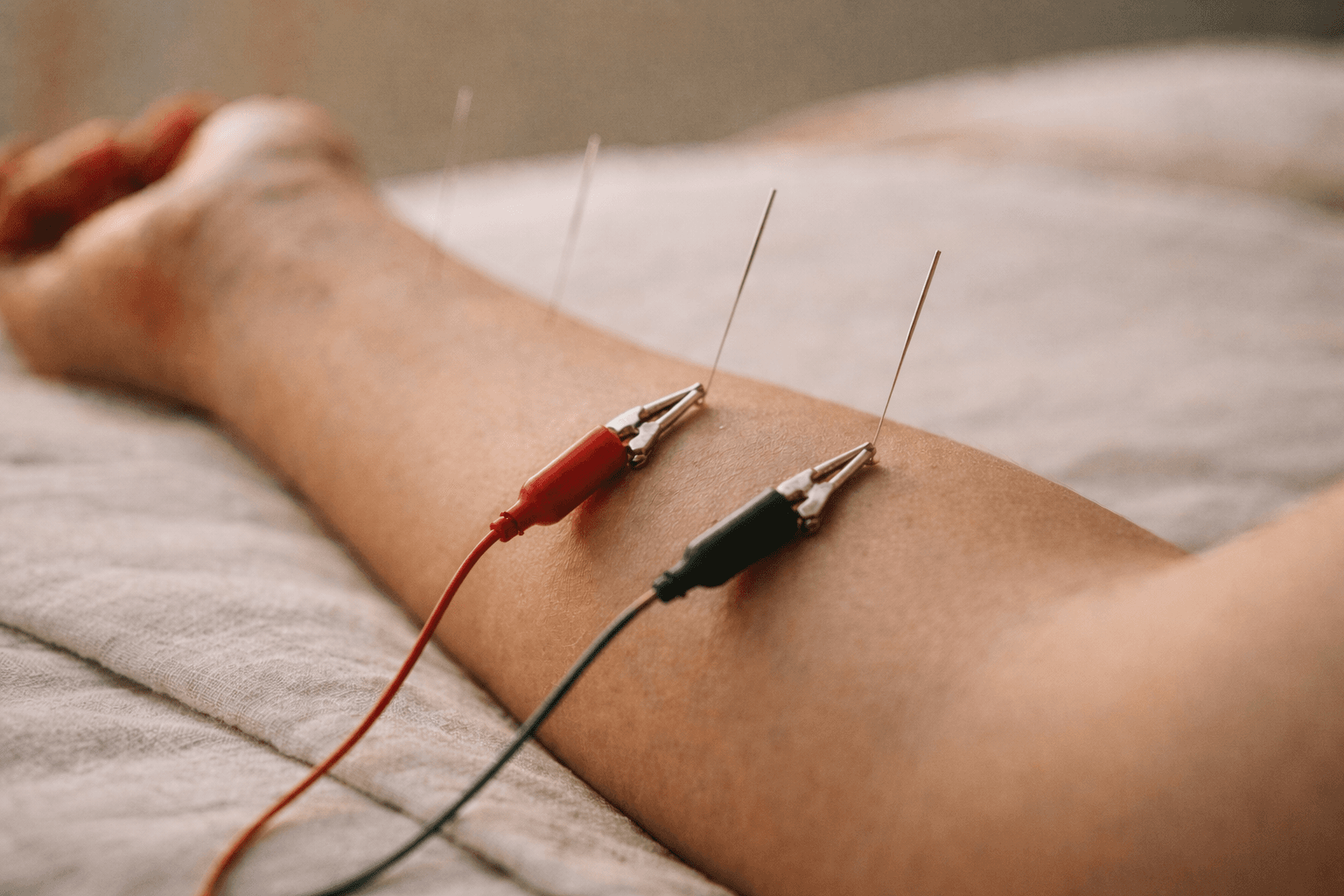
Overview: Electro-acupuncture is acupuncture with a gentle electrical current run through the needles. For neuropathy, that added depth of stimulation reaches damaged nerve pathways that traditional needling and most medications don't. It has the strongest evidence base of any complementary treatment for chemotherapy-induced peripheral neuropathy, and growing evidence for diabetic neuropathy. Most patients notice meaningful change within four to six sessions.
If you've been living with numbness, burning, or tingling in your hands or feet, you already know how few options actually reach it. The gabapentin helps a little, or not at all. The duloxetine takes the edge off, or comes with side effects you can't live with. The neurologist says to wait and hope.
Neuropathy is hard to treat because the nerves themselves have been damaged. Medication can muffle the signals, but the underlying injury stays. That's why patients keep searching long after they've been through the usual options.
Electro-acupuncture is one of the few approaches that works at the level where the problem actually lives. It's acupuncture with a gentle electrical current run through the needles, and it's become the most evidence-supported complementary treatment for chemotherapy-induced neuropathy in oncology literature. It's also the technique Dr. Perry Levenson has trained in with world-class practitioners, and the one he reaches for most often when patients come in with persistent nerve pain.
This post walks through what electro-acupuncture is, how it works on damaged nerves, what the research shows, who it helps, and what to expect if you decide to try it.
What is electro-acupuncture, and how is it different from regular acupuncture?
With traditional acupuncture, fine needles are placed at specific points and either left in place or gently manipulated by hand. Electro-acupuncture adds one more step. Small clips connect the needles to a device that sends a mild, precisely controlled electrical current through them.
The current isn't strong. Most patients describe it as a light pulsing or tapping at the needle site, not a shock. Frequency and intensity are adjusted to what the body needs, and different frequencies target different nervous system responses.
Low frequencies around 2 Hz prompt the body to release endorphins and enkephalins, the same compounds your nervous system produces for pain relief on its own. Higher frequencies around 100 Hz work through a different pathway involving dynorphin and serotonin. In clinical practice, Dr. Levenson uses specific frequency combinations chosen for what he's targeting.
The short version: traditional acupuncture relies on the body's response to the needle. Electro-acupuncture adds a second, consistent signal the nervous system has to respond to. For neuropathy, where nerve fibers are actually damaged, that second signal is often what makes the difference.
How does electro-acupuncture work for nerve damage?
Electro-acupuncture reduces neuropathic pain through several pathways at once. The pulsed current stimulates the body's own pain-modulating compounds, calms the inflammatory response around injured nerves, and appears to support the biological processes involved in nerve fiber repair. It works at the level of the nerve pathway itself, not just the pain signal.
Neuropathy isn't one condition. It's what happens when peripheral nerves, the long fibers that carry sensation from your hands and feet back to the spinal cord, get damaged by disease, treatment, or injury. The damage causes those nerves to fire incorrectly. Signals get sent that shouldn't be, and signals that should be sent come through weak or distorted. That's the numbness, the burning, the tingling, and the pins and needles that don't stop.
Animal and human research suggests electro-acupuncture addresses this in several ways at once:
- It activates the descending pain-inhibitory pathways in the central nervous system that naturally suppress pain signals from the periphery
- It reduces inflammation around injured nerves. A 2020 study in Brain, Behavior, and Immunity showed that low-frequency electro-acupuncture activates a specific spinal microglial pathway that releases the body's own beta-endorphin to quiet neuropathic pain
- It appears to support peripheral nerve regeneration. Preclinical studies have shown electro-acupuncture upregulates neurotrophic factors, the proteins the body uses to repair nerve fibers
The research on exact mechanisms is still developing. But the direction of the evidence is clear: electro-acupuncture is doing something measurable to the nervous system, not just distracting from pain.
What kinds of neuropathy respond best to electro-acupuncture?
Electro-acupuncture has the strongest evidence for chemotherapy-induced peripheral neuropathy and painful diabetic neuropathy. It also treats post-surgical nerve pain, idiopathic peripheral neuropathy, and nerve pain that hasn't responded to medications. Earlier intervention generally produces better outcomes, but patients with long-standing neuropathy can still respond.
Not every neuropathy is the same. These are the types Dr. Levenson sees most often:
Chemotherapy-induced peripheral neuropathy (CIPN). The numbness and burning that starts in the fingertips and toes during chemotherapy, and often persists long after treatment ends. It's one of oncology's hardest side effects: roughly 68% of patients have CIPN in the first month after chemotherapy, and around 30% still have it a year out. Taxanes and platinum-based drugs are the biggest offenders. Our page on acupuncture for cancer support goes deeper into what treatment looks like during and after chemotherapy.
Painful diabetic neuropathy. The burning, tingling, and loss of sensation that comes with long-standing blood sugar imbalance. Standard options like gabapentinoids and duloxetine help some patients but not all. Electro-acupuncture has been studied specifically for this condition with encouraging results.
Post-surgical and post-injury nerve pain. Nerves that were compressed, stretched, or cut during surgery or trauma can keep firing long after the tissue around them has healed. Electro-acupuncture addresses both the local inflammation and the central nervous system sensitization that often develops.
Idiopathic peripheral neuropathy. Neuropathy without a clear cause. More common than most people realize, and often frustrating because treatment options are narrow. This is one of the more common presentations on our acupuncture for chronic pain page.
What does the research show about electro-acupuncture for neuropathy?
The evidence has been building steadily, especially for CIPN.
A 2020 randomized clinical trial published in JAMA Network Open compared real acupuncture against a sham procedure and usual care in breast cancer survivors with chemotherapy-induced neuropathy. Patients receiving real acupuncture had significantly greater reductions in neuropathy pain and improvements in function than either comparison group.
A 2024 systematic review and network meta-analysis of 33 studies involving 2,027 patients with CIPN concluded that acupuncture-related interventions significantly reduce CIPN symptoms. Benefits typically became apparent by the second week of treatment and held through the sixth week.
For diabetic peripheral neuropathy, a 2024 meta-analysis in Frontiers in Neurology found acupuncture improved both pain and nerve conduction compared to standard care, with a strong safety profile across trials. A separate systematic review of peripheral neuropathy reached similar conclusions for diabetic neuropathy, Bell's palsy, carpal tunnel, and HIV-related neuropathy, with nerve conduction improvements measurable on follow-up testing.
The National Center for Complementary and Integrative Health considers acupuncture a well-established option for several chronic pain conditions, including certain peripheral neuropathies. The evidence isn't uniform across every type of nerve damage, but the trajectory is steadily positive, and the safety profile is strong.
An honest note: the major oncology guidelines haven't yet endorsed acupuncture as a standard CIPN recommendation. That reflects the evolving state of research and the bar those guidelines set. The clinical evidence supporting it exists. The formal endorsements are catching up.
What does a session feel like, and how many will you need?
A session feels similar to traditional acupuncture, plus a gentle pulsing or tapping sensation at the treated points. The current stays well below anything uncomfortable. Most patients find the experience deeply relaxing, and many fall asleep on the table. For neuropathy, meaningful change usually shows up somewhere in the four to six session range.
If it's your first time, a typical first visit at Whole Healthy Family runs about an hour and includes a full intake before any needles go in. The treatment itself is quiet. The room is dim. The needles are placed, the clips are attached to selected points, and the device is turned on at a low setting Dr. Levenson adjusts based on your feedback.
What you feel varies by where the points are. At some points the sensation barely registers. At others it's a rhythmic, light pulsing. The current is tuned below the threshold of discomfort. If anything feels sharp, you speak up and it gets adjusted.
Sessions run 45 to 60 minutes. Needles stay in for most of that time, and many patients fall asleep, even ones who were nervous walking in.
For neuropathy, Dr. Levenson's usual expectation is that patients will notice some change by the fourth or fifth session. Nerve fiber recovery is slow, and the pattern is often gradual: less burning at night, more feeling coming back in one finger, fewer strange sensations across the day. You leave your first visit with a written treatment plan that lays out the expected course and what to watch for.
If the approach isn't reaching your neuropathy, Dr. Levenson will tell you directly. You won't be asked to keep going beyond what's useful.
Is electro-acupuncture safe during chemotherapy or with diabetes?
For most patients, yes. Electro-acupuncture is considered safe during active chemotherapy and for people managing diabetes, as long as a qualified practitioner adjusts the approach. Needle site selection, current intensity, and timing around chemotherapy cycles or insulin dosing all get tailored. Patients with pacemakers or other implanted electrical devices require specific modifications.
Across large safety reviews, serious adverse events from acupuncture and electro-acupuncture are rare when performed by a licensed practitioner. The most common side effects are mild: brief soreness at a needle site, small bruises, or short-lived tiredness. Those tend to resolve within a day.
A few specific considerations:
- During chemotherapy. Sessions are timed around your cycle, and needle site selection accounts for white blood cell counts and any areas with compromised skin. If your oncologist has raised concerns about immune status, we work within those parameters.
- With diabetes. Needle sites and depth are chosen with awareness of circulation and skin integrity, especially in the feet. Blood sugar monitoring around sessions matters, since some patients notice a mild effect from treatment.
- With implanted devices. Pacemakers, defibrillators, and certain nerve stimulators require specific placement and current settings, and in some cases traditional needling without the electrical component is the safer choice.
These considerations are exactly why the practitioner's training matters. Dr. Levenson is nationally board certified in acupuncture and Chinese medicine, licensed in Connecticut and New York, with nearly 25 years of clinical experience and advanced electro-acupuncture training. If you've got a specific medical situation, the first phone call is where it gets discussed before any treatment is scheduled.
The bottom line
If medications haven't touched your neuropathy, or if the side effects of the ones that did are stacking up, electro-acupuncture is worth a real conversation. It doesn't replace the care your neurologist or oncologist provides. It works alongside it, targeting the nerve pathway damage that most other treatments can't reach.
The first visit is a real intake, not a sales pitch. You'll leave with a clearer sense of what electro-acupuncture can and can't do for your specific situation, and whether this is a fit for what you're dealing with. If it's not, Dr. Levenson will tell you.
Ready to find out? Book your first appointment at Whole Healthy Family and let's see whether this can finally reach the part of your nervous system everyone else has been talking around.
Frequently asked questions
How is electro-acupuncture different from a TENS unit?
Both use electrical current for pain, but they work differently. A TENS unit sends current through surface electrodes taped to the skin. Electro-acupuncture delivers current through inserted acupuncture needles, which reach deeper tissue and specific nerve-rich points. For many nerve conditions, the needle-based delivery produces more consistent nervous system effects than surface stimulation.
Will electro-acupuncture cure my neuropathy?
For most patients, the realistic goal is meaningful reduction in symptoms and, where possible, improved nerve function. Some neuropathies are reversible and can resolve entirely with treatment. Others involve long-standing nerve damage that's unlikely to fully recover. Dr. Levenson gives you an honest read on what's realistic for your situation after your first visit, not before.
Can I get electro-acupuncture if I have a pacemaker?
Usually not in the standard form. The electrical current could potentially interfere with pacemakers and similar implanted devices. Depending on the device, traditional acupuncture without the electrical component may still be appropriate. Dr. Levenson asks about any implanted medical devices during your intake before planning treatment.
How long do the effects of a single session last?
Relief often builds cumulatively. After a first session, some patients notice reduced pain or tingling that lasts a day or two. As sessions continue, the benefits tend to last longer between visits. After a full course of treatment, many patients maintain improvement with occasional tune-up sessions.
Does insurance cover electro-acupuncture?
Whole Healthy Family is a private-pay practice and doesn't bill insurance directly. Many patients submit claims for partial reimbursement through their insurance's out-of-network benefits or health savings accounts. We can provide documentation to support that process, and pricing details are available when you call.
Planning neuropathy care locally
Care is available in Harrison, NY and Newtown, CT. Bring your diagnosis, medication list and information about when symptoms began. Discuss treatment alongside your existing medical care rather than stopping prescribed treatment. If symptoms are related to chemotherapy, involve your oncology team and review our cancer treatment support guide.
Treatment plans and responses vary. Ask how progress will be assessed and when the plan will be reconsidered. New weakness, loss of balance or worsening numbness warrants medical evaluation.