Can acupuncture help with chemo fatigue? Here's what the research says
Chemo fatigue isn't normal tiredness — it's a different beast. Clinical research shows acupuncture can help, and the evidence has been building steadily. Here's what you need to know.

Dr. Perry Levenson, DACM, L.Ac.Jun 30, 2026
Updated Oct 01, 2026
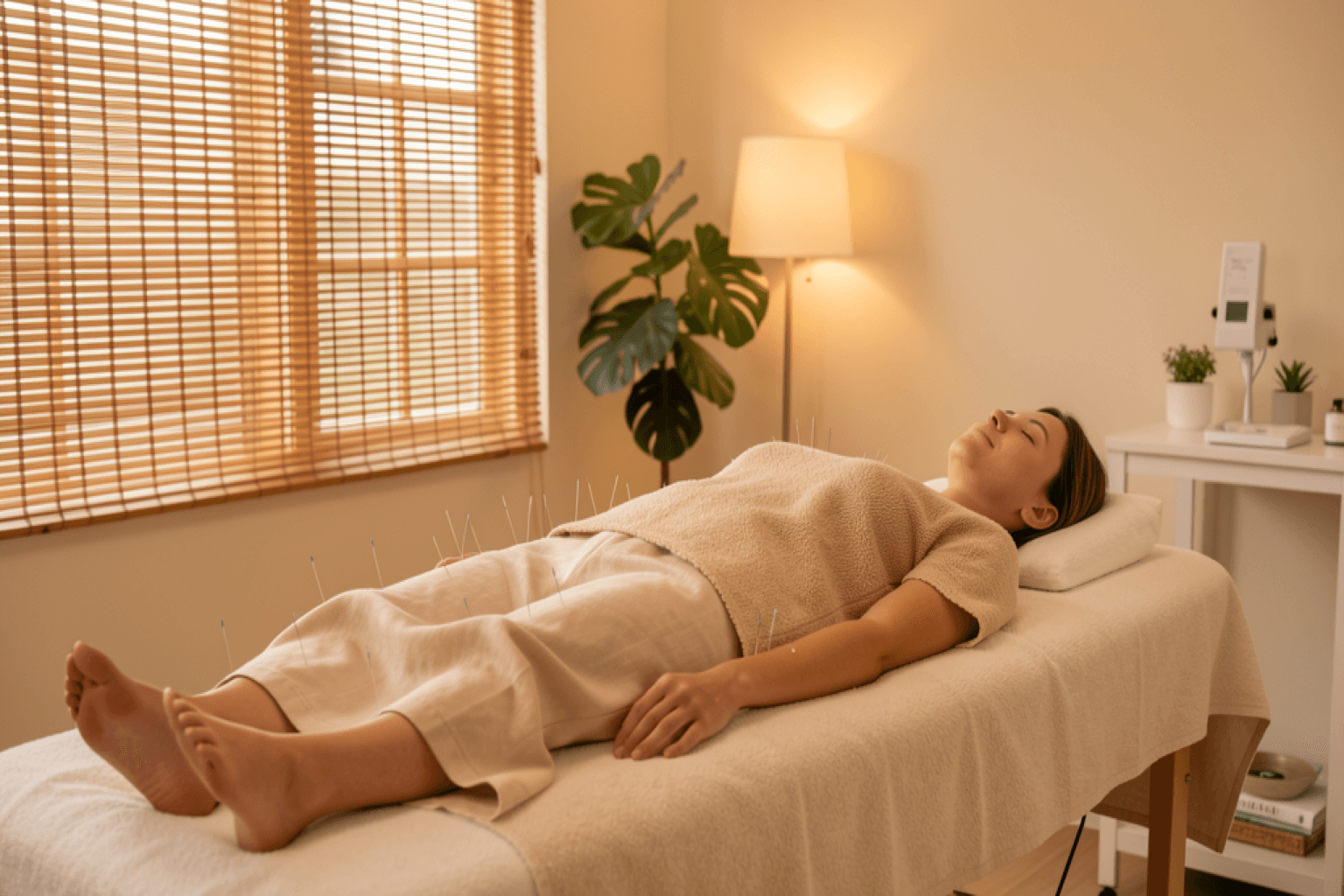
Overview: Chemo fatigue is a persistent, whole-body exhaustion that rest doesn't fix — and it's one of the most common and disruptive side effects of cancer treatment. The research on acupuncture for cancer-related fatigue has been building for years. A 2018 meta-analysis of 1,327 patients found acupuncture effective for reducing fatigue, especially in patients currently undergoing treatment. The National Cancer Institute, Mayo Clinic, and Cancer Research UK all recognize acupuncture as a safe, evidence-supported complementary therapy. For patients in Harrison, NY, Dr. Perry Levenson offers electro-acupuncture — a more targeted approach that uses gentle electrical current to stimulate the nervous system and reduce inflammation driven fatigue.
If you're going through chemotherapy, you've probably heard someone say "get some rest" like it's a fix. But you already know that's not how this works.
Chemo fatigue doesn't feel like being tired after a long day. It's a deeper exhaustion — the kind that shows up whether you slept eight hours or three. It sits in your bones. It makes small tasks feel like marathons. And it's one of the most common reasons cancer patients say treatment is harder than they expected.
The question is what actually helps. And for a growing number of patients and oncologists, acupuncture is part of the answer.
Chemo fatigue isn't the same as being tired
This distinction matters because the standard advice for normal tiredness — rest more, sleep better, exercise lightly — often doesn't touch chemo fatigue. That's not because you're doing anything wrong. It's because the mechanisms are different.
Cancer-related fatigue is driven by a combination of factors that don't apply to everyday tiredness:
- Inflammation. Chemotherapy triggers a systemic inflammatory response. Inflammatory cytokines like IL-6 and TNF-α circulate at elevated levels and directly contribute to fatigue.
- Metabolic disruption. Treatment alters how your body produces and uses energy at the cellular level.
- Anemia and blood changes. Many chemo drugs suppress bone marrow function, reducing red blood cell counts and oxygen delivery.
- Sleep disruption. Not from poor habits, but from treatment schedules, medication side effects, and the body's own disrupted circadian rhythms.
According to the Mayo Clinic, cancer fatigue affects roughly 40% of patients at diagnosis, and up to 99% of those in advanced stages or undergoing active treatment. It's not a sign that you're weak. It's a sign that your body is working hard.
How acupuncture targets fatigue at the source
Acupuncture doesn't just make you feel more relaxed — though that's part of it. The research points to several physiological effects that directly address the drivers of chemo fatigue.
First, acupuncture regulates the autonomic nervous system. Chemotherapy often throws the sympathetic and parasympathetic systems out of balance, keeping the body in a chronic "fight or flight" state that drains energy. Acupuncture promotes a shift toward the parasympathetic — the rest-and-digest state — which is where the body recovers.
Second, acupuncture reduces inflammatory markers. Multiple studies have shown that acupuncture lowers circulating levels of pro-inflammatory cytokines including IL-6 and TNF-α. Since inflammation is a primary driver of cancer-related fatigue, reducing it at the source has a measurable effect on energy levels.
Third, acupuncture stimulates the release of endorphins and serotonin — the body's own feel-good and pain-modulating compounds. This improves mood, reduces the emotional weight of fatigue, and helps with sleep quality.
The National Cancer Institute summarizes it clearly: participants in clinical studies reported that acupuncture reduced fatigue, anxiety, and depression, and improved quality of life when compared with standard care alone.
What the research actually shows about acupuncture for chemo fatigue
The evidence has been accumulating across multiple well-regarded institutions. Here's a summary of the key studies:
| Study | Finding | Source |
|---|---|---|
| 2018 meta-analysis (10 trials, 1,327 patients) | Acupuncture effective for cancer-related fatigue, especially breast cancer patients on active treatment | Cancer Research UK |
| Cheng et al. 2017 (RCT, low risk of bias) | Significant fatigue reduction vs. sham acupuncture (p < 0.001) in lung cancer patients | Journal of Cancer Research and Clinical Oncology |
| Vickers et al. (Phase II study) | Fatigue improved by 31.1% with acupuncture after chemotherapy | Supportive Care in Cancer |
| NCI patient review | Participants reported reduced fatigue, anxiety, depression, and improved quality of life | National Cancer Institute |
| Electroacupuncture (5 studies, 251 patients) | BFI scores dropped from 4.38 to 1.93 — a clinically meaningful reduction | Supportive Care in Cancer |
It's worth being honest about the limitations. Many acupuncture studies are small, and blinding is inherently difficult — patients know when they're receiving real needles versus sham. A 2026 systematic review noted that while most studies show positive results, broader, better-controlled trials are needed. But the direction of the evidence is consistent, and major cancer organizations now include acupuncture in their supportive care guidelines.
How many sessions does it take?
The answer depends on the person, but most research points to noticeable improvement within three to six sessions.
Cancer Research UK's review notes that patients who respond to acupuncture typically start seeing benefits within this window. Sessions are usually once or twice per week, and each treatment runs about 20 to 30 minutes.
Dr. Levenson's approach at Whole Healthy Family is individualized. He gives you a written treatment plan at your first visit with clear milestones and an honest assessment of what to expect. If something isn't working, you'll hear it directly.
Electroacupuncture vs. traditional acupuncture for fatigue
This is where Perry's practice stands apart from most acupuncturists in Westchester County.
Traditional acupuncture relies on manual needle stimulation. The practitioner inserts fine needles at specific points and may gently turn or flick them to create a response.
Electroacupuncture takes it a step further. Small clips connect the needles to a device that delivers a mild, precisely controlled electrical current. This produces a more consistent, repeatable nervous system stimulation. It's not stronger — it's more targeted.
For fatigue, electroacupuncture has a specific advantage. Research shows it reduces inflammatory cytokines more consistently than manual needling alone, and the standardized frequencies make the treatment more reproducible across sessions. A 2026 systematic review of electroacupuncture for cancer-related fatigue found promising results across all five included studies, with significant reductions in fatigue scores.
Dr. Levenson has advanced training in electroacupuncture with world-class practitioners and 30+ years of clinical experience. That combination — the technique plus the experience — is rare to find in one place.
Is acupuncture safe during chemotherapy?
Yes — with the right practitioner.
Across large safety reviews, serious complications from acupuncture occur in less than 1 in 10,000 treatments. The most common side effects are minor bruising or brief soreness at needle sites.
For cancer patients specifically, the critical factor is the practitioner's training in clean needle protocol. Because chemotherapy can suppress the immune system, sterile, single-use needles and proper site preparation aren't optional. Dr. Levenson is licensed in New York and Connecticut, nationally board certified in acupuncture and Chinese herbal medicine, and has treated cancer patients throughout his career.
If you're concerned about safety — and you should be — the first step is a conversation. Dr. Levenson does real phone intakes before any treatment is scheduled. You'll discuss your specific situation, your treatment timeline, and any precautions that apply.
Frequently asked questions
Can acupuncture help with extreme fatigue after chemotherapy?
Yes. Research shows acupuncture can reduce fatigue even for patients who have completed treatment and are dealing with lingering exhaustion. The mechanisms — reducing inflammation, regulating the nervous system, improving sleep — apply whether you're mid-treatment or months past your last cycle.
Does acupuncture help with other chemo side effects too?
It does. The strongest evidence is for chemotherapy-induced nausea and vomiting. Acupuncture also shows benefit for pain, neuropathy, anxiety, sleep problems, and dry mouth. Many patients find that a single acupuncture session addresses several symptoms at once, which is one reason it's become a standard offering at major cancer centers.
How many sessions of acupuncture do you need for fatigue?
Most patients notice some change within three to six sessions when treated once or twice per week. Some feel improvement sooner. Dr. Levenson provides a written plan with clear expectations at your first visit.
Should I do acupuncture during chemo or wait until after?
Either can work, but there's evidence that starting during active treatment may be more effective. A 2018 meta-analysis found acupuncture especially helpful for patients currently undergoing treatment, not just survivors. If you're considering it, the best time to have the conversation is now — not after you've already been struggling for months.
Is electroacupuncture better than regular acupuncture for fatigue?
The evidence suggests electroacupuncture may be more effective for fatigue because it produces more consistent nervous system stimulation and has a stronger anti-inflammatory effect. Dr. Levenson offers both approaches and recommends the technique best suited to your specific situation.
Does insurance cover acupuncture for cancer patients?
Whole Healthy Family is a private-pay practice and does not bill insurance directly. However, many patients receive partial reimbursement through out-of-network benefits or use health savings accounts. We provide documentation to support your claim, and pricing is available when you call.
Meet Dr. Perry Levenson in Harrison, NY
Dr. Perry Levenson, DACM, has been practicing acupuncture and Chinese medicine for over 30 years. He holds a Doctorate in Acupuncture and Chinese Medicine, is licensed in New York and Connecticut, and is nationally board certified in both acupuncture and Chinese herbal medicine. His advanced training in electroacupuncture, combined with decades of experience treating cancer patients, makes him one of the most qualified practitioners in Westchester for managing chemo-related fatigue.
Harrison, NY: 550 Mamaroneck Avenue, Suite 102 | Tuesday & Wednesday 9 AM – 6 PM, Friday 8 AM – 4 PM Newtown, CT: 141 Mount Pleasant Rd, Unit 3 | Monday & Thursday 8 AM – 8 PM Phone: (914) 584-6995 Book online: whole-healthy-family.acubliss.app
Disclaimer: This article is for informational purposes and does not constitute medical advice. Always consult with your oncologist before starting any complementary therapy during cancer treatment.