Acupuncture for insomnia and sleep disorders
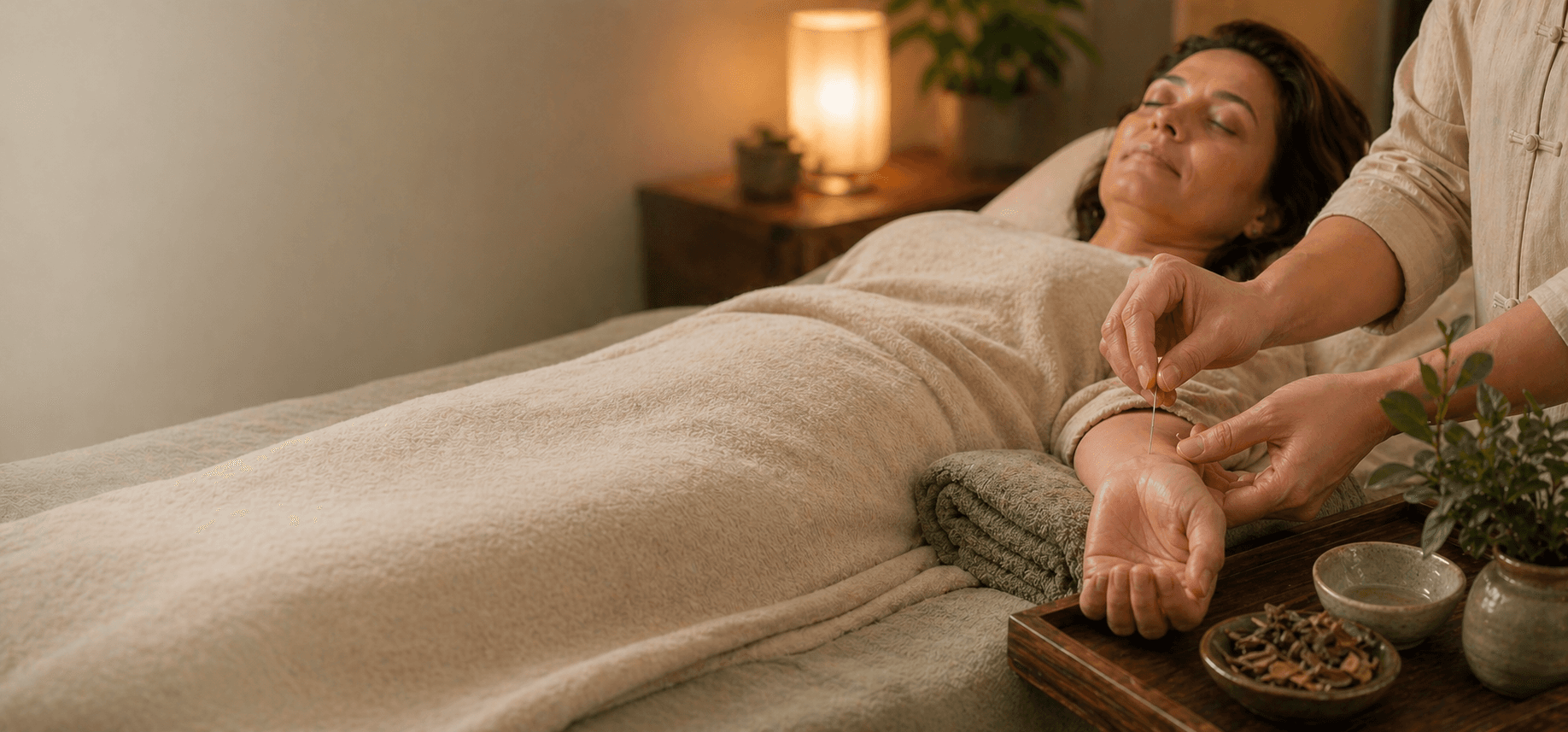
It isn't just tiredness. It's a day already lost before it starts.
Insomnia isn't just a nighttime problem. It's what the missing hours take from everything after.
The night started fine. And then something woke you at 2 a.m., and your mind was moving, and you couldn't slow it down. By 4 you were watching the ceiling. By 6 you gave up.
Poor sleep doesn't stay in the bedroom. It follows you into the brain fog that sits behind every conversation, the irritability that surfaces at the wrong moment, the afternoon crash that cuts your productive hours in half.
Patients describe it as a dimmer switch that won't go up all the way. Everything is functional. Nothing is quite right.
You may have already tried melatonin, or Ambien, or Benadryl, or the sleep hygiene rules from the internet. Some of them helped a little. None of them solved it.
The assumption is usually that you haven't found the right pill yet. The harder answer is that something in your nervous system isn't releasing into sleep the way it used to. The mechanism that's supposed to hand the body off to rest has quietly stopped working.
That's a different problem, and it needs a different approach.
How acupuncture works on the systems sleep depends on
Sleep depends on melatonin, cortisol, and the autonomic nervous system. Acupuncture acts on all three.
Acupuncture acts on three systems involved in sleep: melatonin production, cortisol rhythm, and autonomic nervous system balance. Together, these govern whether the body can transition into rest and stay there.
A 2004 study in the Journal of Neuropsychiatry and Clinical Neurosciences found that five weeks of acupuncture significantly increased nocturnal melatonin secretion and improved sleep onset, total sleep time, and sleep efficiency. Research in Frontiers in Neuroscience shows acupuncture stimulates the vagus nerve and activates the parasympathetic nervous system, producing measurable drops in cortisol and stress reactivity.
The NCCIH includes acupuncture among the complementary approaches studied for insomnia, with reviews finding it may improve sleep quality, though further high-quality research is recommended.
When appropriate, Dr. Levenson adds classical Chinese herbal formulas to extend that regulation between sessions. This isn't sedation. It's restoring the conditions the body needs to sleep on its own.
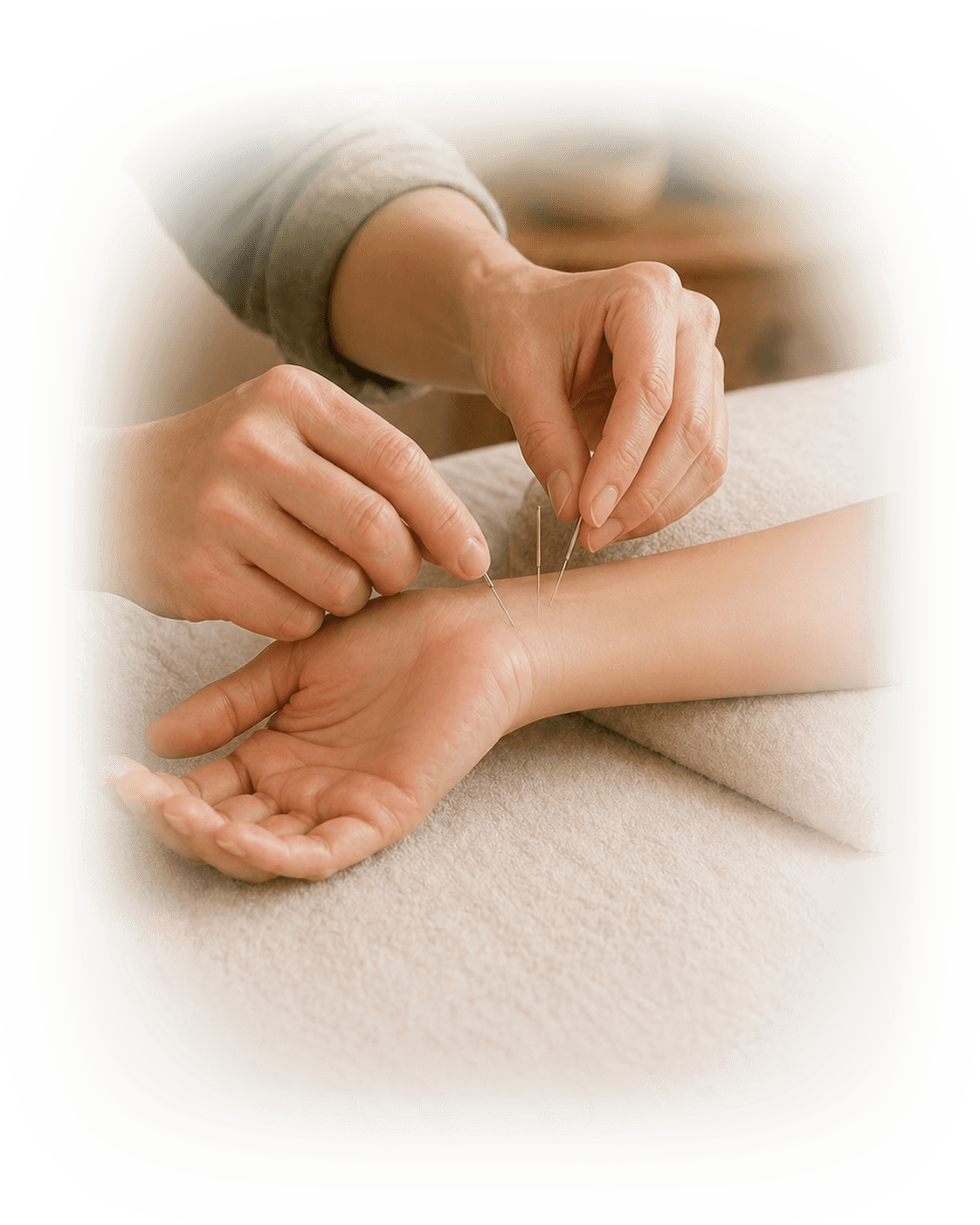
Insomnia has patterns. Yours shapes the treatment.
Dr. Levenson treats these sleep conditions regularly, with particular experience in cases that haven't responded to medication alone.
Sleep-onset insomnia
The racing mind that won't quiet down, no matter how tired your body is.
Maintenance insomnia
Falling asleep isn't the problem. Staying asleep is.
Early morning waking
Wide awake at 3 or 4 a.m., unable to fall back asleep.
Menopause insomnia
Night sweats, hormone shifts, and sleep that disappeared in your mid-40s.
Anxiety-driven insomnia
A nervous system stuck in alert mode when it should be winding down.
Pain-related insomnia
Chronic pain that wakes you through the night or keeps you from getting comfortable.
Chemo-related insomnia
Chemotherapy and radiation can profoundly disrupt sleep patterns and recovery.
Sleep aid dependency
For patients looking to reduce reliance on sleep aids, under their physician's guidance.
Acupuncture and herbal medicine shaped to your pattern

Dr. Levenson treats sleep disorders through acupuncture, advanced electro-acupuncture, and Chinese herbal medicine, developing a plan specific to each patient rather than applying a standard insomnia protocol.
Sleep is rarely just a sleep problem. At the first visit, he'll ask about what drives the waking: is it a racing mind, physical pain, night sweats, a nervous system that won't quiet, or some combination? A patient whose insomnia is rooted in menopausal hormonal changes receives a different approach than one whose sleeplessness is driven by anxiety or chronic pain, even if the symptom looks the same from the outside.
A few things shape every session:
- Acupuncture as the foundation, with results most patients feel in-session
- Chinese herbal formulas when a combined approach strengthens the result
- Space to address the anxiety, pain, or hormonal factors connected to your sleep
- A written plan with realistic milestones, adjusted as your sleep improves
Dr. Levenson works alongside whatever other care you're receiving. If you're on sleep medication, the goal is to support your nervous system's own capacity for sleep so the medication does less of the work over time, in coordination with your prescribing physician.

How acupuncture compares to other common approaches
Most patients exploring acupuncture for sleep have already tried medication, supplements, or both. Here's how the approaches differ.
| Compare treatments | Acupuncture + herbal medicine | CBT for insomnia | Z-drugs (Ambien, Lunesta) | OTC sleep aids |
|---|---|---|---|---|
| Addresses nervous system regulation | Partially (behavioral patterns) | Sedation, not regulation | ||
| Hormone regulation (melatonin, cortisol) | Indirectly (cortisol may improve) | Melatonin supplements only | ||
| Risk of dependency or tolerance | None | None | common | Low to moderate |
| Typical timeframe for improvement | 4–8 sessions | 6–8 weeks | Immediate (short-term) | Immediate (short-term) |
| Effective for pain-related insomnia | Limited | Partially | ||
| Addresses anxiety driving poor sleep |
| Addresses nervous system regulation | |
|---|---|
| Hormone regulation (melatonin, cortisol) | |
| Risk of dependency or tolerance | None |
| Typical timeframe for improvement | 4–8 sessions |
| Effective for pain-related insomnia | |
| Addresses anxiety driving poor sleep |
| Addresses nervous system regulation | Partially (behavioral patterns) |
|---|---|
| Hormone regulation (melatonin, cortisol) | Indirectly (cortisol may improve) |
| Risk of dependency or tolerance | None |
| Typical timeframe for improvement | 6–8 weeks |
| Effective for pain-related insomnia | Limited |
| Addresses anxiety driving poor sleep |
| Addresses nervous system regulation | Sedation, not regulation |
|---|---|
| Hormone regulation (melatonin, cortisol) | |
| Risk of dependency or tolerance | common |
| Typical timeframe for improvement | Immediate (short-term) |
| Effective for pain-related insomnia | Partially |
| Addresses anxiety driving poor sleep |
| Addresses nervous system regulation | |
|---|---|
| Hormone regulation (melatonin, cortisol) | Melatonin supplements only |
| Risk of dependency or tolerance | Low to moderate |
| Typical timeframe for improvement | Immediate (short-term) |
| Effective for pain-related insomnia | |
| Addresses anxiety driving poor sleep |
| Compare treatments | Acupuncture + herbal medicine | CBT for insomnia | Z-drugs (Ambien, Lunesta) |
|---|---|---|---|
| Addresses nervous system regulation | Partially (behavioral patterns) | Sedation, not regulation | |
| Hormone regulation (melatonin, cortisol) | Indirectly (cortisol may improve) | ||
| Risk of dependency or tolerance | None | None | common |
| Typical timeframe for improvement | 4–8 sessions | 6–8 weeks | Immediate (short-term) |
| Effective for pain-related insomnia | Limited | Partially | |
| Addresses anxiety driving poor sleep |
| Addresses nervous system regulation | |
|---|---|
| Hormone regulation (melatonin, cortisol) | |
| Risk of dependency or tolerance | None |
| Typical timeframe for improvement | 4–8 sessions |
| Effective for pain-related insomnia | |
| Addresses anxiety driving poor sleep |
| Addresses nervous system regulation | Partially (behavioral patterns) |
|---|---|
| Hormone regulation (melatonin, cortisol) | Indirectly (cortisol may improve) |
| Risk of dependency or tolerance | None |
| Typical timeframe for improvement | 6–8 weeks |
| Effective for pain-related insomnia | Limited |
| Addresses anxiety driving poor sleep |
| Addresses nervous system regulation | Sedation, not regulation |
|---|---|
| Hormone regulation (melatonin, cortisol) | |
| Risk of dependency or tolerance | common |
| Typical timeframe for improvement | Immediate (short-term) |
| Effective for pain-related insomnia | Partially |
| Addresses anxiety driving poor sleep |
From first call to consistent sleep
Every step is shaped around your specific sleep pattern, what's driving it, and what you've already tried.
Dr. Levenson is genuinely caring and interested in healing whatever ails you. I was nervous about getting acupuncture for the first time and he made me feel comfortable and cared for. Dr. Levenson is the best!

Lori Spechler
First-time acupuncture patient
Frequently asked questions
The questions patients most often ask before starting acupuncture for insomnia and sleep disorders.
Most patients with sleep disorders notice meaningful improvement within 4 to 6 sessions, though the timeline depends on how long the problem has been present and what's driving it. Recent sleep disruption, such as a few months of stress-related insomnia, tends to respond faster than sleep problems that have been present for years.
At your first visit, Dr. Levenson will give you an honest timeline based on your specific history.
Yes. Menopause and perimenopause-related insomnia is one of the more common presentations in this practice. Declining progesterone and estrogen directly disrupt sleep architecture, and acupuncture addresses both the hormonal dysregulation and the accompanying anxiety that often compounds it.
Many patients in this group also benefit from Chinese herbal formulas alongside acupuncture, which can be discussed at the first visit.
Acupuncture can be an effective part of a plan to reduce reliance on sleep medication, though any changes to prescribed medication should happen in coordination with your prescribing physician, not independently.
The goal of acupuncture in this context is to support the nervous system's own capacity for sleep regulation, so that the medication is doing less of the work over time. Dr. Levenson works alongside whatever other care you are receiving, not instead of it.
Acupuncture acts on three key systems involved in sleep regulation. It stimulates melatonin production, which tells the brain that it is time to sleep. It reduces cortisol levels, which allows the nervous system to wind down from the elevated alertness that stress creates. And it shifts the nervous system from sympathetic (alert, reactive) to parasympathetic (calm, restorative) dominance.
These are documented effects in peer-reviewed research. The result is a body that is physiologically better prepared to enter and sustain sleep.
Yes. Early morning waking is a distinct sleep pattern in Chinese medicine, associated with specific organ systems and treated with targeted point selection and, in some cases, herbal formulas.
This presentation is common in patients dealing with anxiety, hormonal changes, or elevated nighttime cortisol. Dr. Levenson treats it regularly and will assess which of those factors is most likely at play in your case.
Chronic pain and poor sleep reinforce each other in a cycle that is hard to break from either direction alone. Acupuncture is one of the few approaches that addresses both simultaneously, reducing pain signals through the nervous system while also lowering the physiological arousal that prevents sleep.
Patients at Whole Healthy Family who come in for chronic pain frequently report that their sleep improves alongside their pain, even when they didn't list sleep as their primary concern. For patients where both are significant, Dr. Levenson addresses both in the treatment plan.
Whole Healthy Family is a private-pay practice and does not bill insurance directly. Many patients are able to submit claims for partial reimbursement through their insurance's out-of-network benefits.
We can provide documentation to support that process. Pricing details are available when you call.
If sleep has been slipping away from you, this is worth a conversation.
Dr. Levenson has nearly 25 years of clinical experience, and the time to listen for the whole picture. A first visit will tell you whether acupuncture can get to the root of what's keeping you awake. You don't have to keep losing hours to the ceiling.
Harrison New York
550 Mamaroneck Ave, Suite 102, Harrison, NY 10528
Tuesday & Wednesday 9 AM - 6 PM
Friday 8 AM - 4 PM
Newtown Connecticut
141 Mount Pleasant Rd, Unit 3, Newtown, CT 06470
Monday & Thursday 8 AM – 8 PM