Support between visits
Breathing and meditation guidance can give you practical ways to respond to stress between appointments. Acupuncture is a complementary option to discuss alongside therapy and medical care.
Care is available at our Harrison office and Newtown office.
Explore meditation for chronic pain and sleep support.
Acupuncture for anxiety and depression

The weight you carry that's ready to lift
Anxiety doesn't always arrive in a panic attack. For most people, it's quieter than that.
It's the background hum that starts before you open your eyes in the morning. The sense that something is wrong, even when nothing specific is:
- The mental loop that runs while you're trying to fall asleep
- The distraction that follows you into meetings and conversations
- The difficulty being present with the people you love
Depression has its own texture. It's less often the dramatic despair people picture and more often a kind of flatness — the joy that's gone quiet. Things that used to interest you don't. The effort required to get through an ordinary day feels disproportionate. You function, technically. But the aliveness is missing.
Chronic stress sits underneath both. It's the load that never fully lifts: work, money, aging parents, your own body starting to ask more of you than it used to. The stress response was designed for acute threats, not for the sustained pressure most people in their 40s, 50s, and 60s are actually living with.
And it compounds. The worse you feel, the harder it is to do the things that might help. Sleep suffers, patience thins, and the gap between how you appear and how you actually feel keeps widening.
You've likely tried things that helped, a little, for a while. Maybe medication, maybe therapy, maybe both. You're not looking for a replacement. You're looking for something that gets at what's still not resolved.
That's exactly the kind of patient Dr. Levenson sees every week.
How acupuncture actually works for anxiety and depression
It’s not a relaxation technique. Here’s what the research actually shows.
Your nervous system has two modes. Sympathetic — fight-or-flight — keeps you alert, wound up, and scanning for danger. Parasympathetic is where sleep, digestion, and emotional regulation actually happen. Chronic anxiety locks you in sympathetic dominance, and the switch that should flip back off doesn't.
Acupuncture shifts that balance. Research shows it stimulates the vagus nerve and activates the parasympathetic nervous system — producing measurable drops in heart rate, cortisol, and stress reactivity. It also modulates the HPA axis, the system governing your stress response, helping it recalibrate over time. Studies reviewed by the NCCIH recognize it as a treatment with meaningful evidence for anxiety and stress-related conditions.
For depression, the mechanism is different but equally concrete. Acupuncture influences serotonin and dopamine — the same neurotransmitters targeted by antidepressants. A major clinical trial found it produced effects comparable to counseling, with benefits lasting up to 12 months. For patients already on SSRIs, it works alongside medication, not against it.
Dr. Levenson often layers in Chinese herbal medicine to address what doesn't resolve between sessions — nighttime restlessness, stress-related digestive symptoms, the deep fatigue that sleep doesn't fix. He's nationally board certified in Chinese herbal medicine, so any formula he recommends carries the same clinical rigor as his needling work.
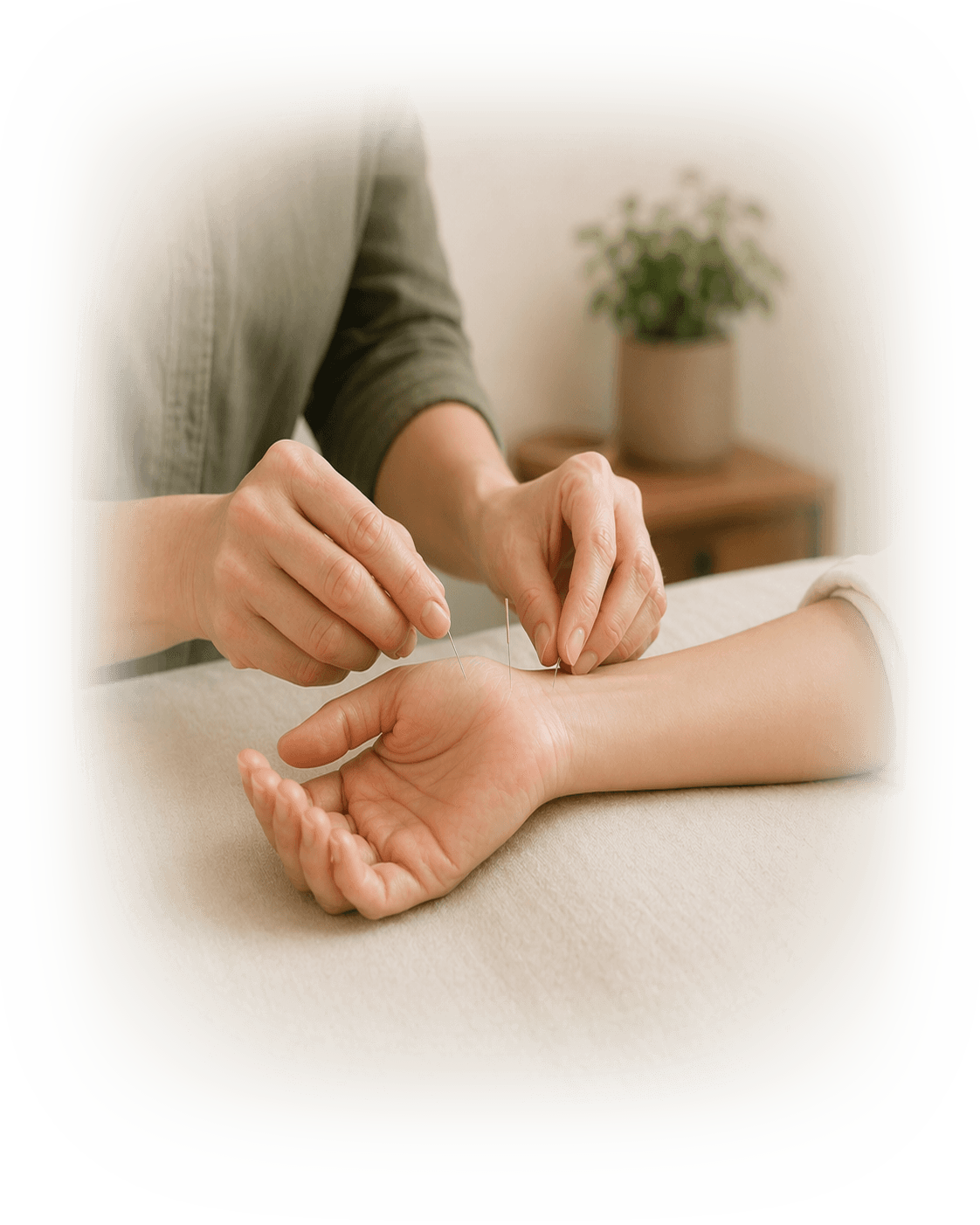
Anxiety and depression rarely travel alone
The following conditions overlap significantly and are all within the scope of what Dr. Levenson treats.
Generalized anxiety
Persistent worry, physical tension, difficulty settling
Chronic stress
Sustained pressure that doesn't resolve between stressors
Burnout
The depletion that follows months or years of running too hot
Depression
Low mood, absence of motivation, loss of interest, emotional flatness
Panic disorder
Recurring panic attacks and the anticipatory anxiety that follows them
Grief and loss
The emotional weight that outlasts what others expect of you
Anxiety-related sleep problems
Racing mind at bedtime, waking at 3 a.m., unrestorative sleep
Stress-related digestive symptoms
IBS, nausea, and gut symptoms driven by the nervous system Most anxiety/depression conditions have some digestive issue as part of the presentation. Addressing digesting is not an adjunt, it is a core part of most of my treamtmenst for anxiety and depression.
Treatment shaped around your whole picture

Every patient who comes in for anxiety or depression gets something that most medical appointments don't allow for: time.
Your first visit is a real conversation, not a checklist. Dr. Levenson wants to understand when things started, what makes them worse, what you've already tried, and how it's affecting your daily life. That conversation shapes everything. No two treatment plans look alike.
Treatment is layered by design. Acupuncture addresses the nervous system directly. Chinese herbal medicine extends that work between sessions. Guidance on sleep, breathing, and stress patterns rounds out the rest.
For anxiety with a strong physical component (muscle tension, chest tightness, insomnia), he uses advanced electro-acupuncture techniques that offer nervous system regulation traditional needling alone may not reach.
The goal isn't to manage symptoms indefinitely. It's to get you to a place where you're no longer white-knuckling your way through the week, and then see how much further we can go.

How acupuncture compares to other common approaches
Most patients exploring acupuncture for anxiety or depression have already tried medication, therapy, or both. Here's how the approaches differ.
| Compare treatments | Acupuncture + Chinese herbal medicine | SSRIs / antidepressants | Talk therapy (CBT) | Benzodiazepines |
|---|---|---|---|---|
| Addresses nervous system dysregulation | Indirectly (targets neurotransmitters) | Partially (behavioral patterns) | Symptom suppression only | |
| Typical timeframe for improvement | 4–6 sessions | 4–6 weeks | 12–20 sessions | Immediate (short-term only) |
| Side effects | Minimal (temporary soreness) | Nausea, weight gain, sexual dysfunction | None | Drowsiness, cognitive impairment |
| Risk of dependency or tolerance | None | Discontinuation syndrome possible | None | High |
| Addresses physical symptoms (insomnia, tension, digestion) | Partially | Limited | Temporarily | |
| Effective alongside other treatments | Caution with some combinations | Short-term use only |
| Addresses nervous system dysregulation | |
|---|---|
| Typical timeframe for improvement | 4–6 sessions |
| Side effects | Minimal (temporary soreness) |
| Risk of dependency or tolerance | None |
| Addresses physical symptoms (insomnia, tension, digestion) | |
| Effective alongside other treatments |
| Addresses nervous system dysregulation | Indirectly (targets neurotransmitters) |
|---|---|
| Typical timeframe for improvement | 4–6 weeks |
| Side effects | Nausea, weight gain, sexual dysfunction |
| Risk of dependency or tolerance | Discontinuation syndrome possible |
| Addresses physical symptoms (insomnia, tension, digestion) | Partially |
| Effective alongside other treatments | Caution with some combinations |
| Addresses nervous system dysregulation | Partially (behavioral patterns) |
|---|---|
| Typical timeframe for improvement | 12–20 sessions |
| Side effects | None |
| Risk of dependency or tolerance | None |
| Addresses physical symptoms (insomnia, tension, digestion) | Limited |
| Effective alongside other treatments |
| Addresses nervous system dysregulation | Symptom suppression only |
|---|---|
| Typical timeframe for improvement | Immediate (short-term only) |
| Side effects | Drowsiness, cognitive impairment |
| Risk of dependency or tolerance | High |
| Addresses physical symptoms (insomnia, tension, digestion) | Temporarily |
| Effective alongside other treatments | Short-term use only |
| Compare treatments | Acupuncture + Chinese herbal medicine | SSRIs / antidepressants | Talk therapy (CBT) |
|---|---|---|---|
| Addresses nervous system dysregulation | Indirectly (targets neurotransmitters) | Partially (behavioral patterns) | |
| Typical timeframe for improvement | 4–6 sessions | 4–6 weeks | 12–20 sessions |
| Side effects | Minimal (temporary soreness) | Nausea, weight gain, sexual dysfunction | None |
| Risk of dependency or tolerance | None | Discontinuation syndrome possible | None |
| Addresses physical symptoms (insomnia, tension, digestion) | Partially | Limited | |
| Effective alongside other treatments | Caution with some combinations |
| Addresses nervous system dysregulation | |
|---|---|
| Typical timeframe for improvement | 4–6 sessions |
| Side effects | Minimal (temporary soreness) |
| Risk of dependency or tolerance | None |
| Addresses physical symptoms (insomnia, tension, digestion) | |
| Effective alongside other treatments |
| Addresses nervous system dysregulation | Indirectly (targets neurotransmitters) |
|---|---|
| Typical timeframe for improvement | 4–6 weeks |
| Side effects | Nausea, weight gain, sexual dysfunction |
| Risk of dependency or tolerance | Discontinuation syndrome possible |
| Addresses physical symptoms (insomnia, tension, digestion) | Partially |
| Effective alongside other treatments | Caution with some combinations |
| Addresses nervous system dysregulation | Partially (behavioral patterns) |
|---|---|
| Typical timeframe for improvement | 12–20 sessions |
| Side effects | None |
| Risk of dependency or tolerance | None |
| Addresses physical symptoms (insomnia, tension, digestion) | Limited |
| Effective alongside other treatments |
Four steps between here and feeling like yourself again
The path from your first call to real, sustained improvement follows a clear structure. Here's what each stage involves.
I've been a client of Dr. Perry for several years, seeing him for anxiety, stress and digestive issues. His expertise in acupuncture & herbal medicine has truly transformed my life. I whole heartedly trust him & recommend his care without hesitation.
Nicole King
Newtown, CT patient
Frequently asked questions
Most popular questions that patients ask before their first visit.
Acupuncture produces measurable physiological changes that are distinct from placebo effects. Multiple randomized controlled trials have documented its impact on cortisol levels, heart rate variability, and vagal nerve activity, all of which are markers of nervous system regulation. The National Center for Complementary and Integrative Health (NCCIH) recognizes acupuncture as a treatment with meaningful evidence for anxiety and stress-related conditions.
That said, the honest answer is that individual response varies. Some patients notice changes quickly; others take longer. Dr. Levenson will tell you by the fourth or fifth visit whether you're responding in a way that suggests continued treatment makes sense. No pressure to commit beyond that.
Yes. Acupuncture works well alongside SSRIs, anxiolytics, and talk therapy and doesn't interfere with any of them. Many patients at this practice are already in therapy or on medication and are looking for additional support, not a replacement. Some patients, over time and in consultation with their prescribing physician, find they're able to reduce medication. That's their decision, made with their prescriber. Dr. Levenson's role is to help your nervous system function better, whatever else is part of your care.
Most patients treating anxiety and depression notice meaningful changes in sleep quality, stress reactivity, and mood within four to six sessions. Some respond faster. The first session is largely diagnostic, and the picture comes into focus over the first three to four visits. Dr. Levenson reassesses regularly and gives you a plain assessment of how you're responding.
Chinese herbal medicine uses formulas made from plant, mineral, and occasionally animal-derived ingredients, selected specifically for your presentation. It's not required. Acupuncture alone is effective for many patients. But for anxiety with significant sleep disruption, chronic stress with digestive symptoms, or depression that includes fatigue and low energy, adding a herbal formula can extend the benefit of acupuncture between sessions. Dr. Levenson is nationally board certified in Chinese Herbal Medicine, so any formula he recommends is clinically grounded, not generic.
It can be, depending on the severity of your anxiety and your situation. Acupuncture is a reasonable primary approach for mild to moderate anxiety, particularly for people who prefer not to start medication or who have had side effects they'd like to avoid. For more severe or clinical presentations, it often works best as part of a broader approach. Dr. Levenson will give you an honest read at your first visit on what's realistic for your specific situation.
No. Patients with long-standing anxiety often respond well to acupuncture, particularly when previous approaches have addressed the thoughts but not the underlying nervous system dysregulation. The body's stress response can be recalibrated at any stage. What takes longer isn't treating the chronic condition itself, it's undoing the compensatory patterns the body has built around it. Dr. Levenson's approach accounts for that.
Most patients with anxiety expect to feel uncomfortable. The majority report the opposite. The needles used are extremely fine, nothing like an injection, and most patients shift into a noticeably calm state within the first few minutes of a session. Some fall asleep on the table. The environment is quiet, unhurried, and calm by design. If you have a strong needle aversion or specific concerns, bring them up at the first appointment. The approach can be adjusted.
Ready to stop managing and start resolving
Dr. Levenson has spent nearly 25 years helping patients move past the point where they're just getting through the day. If what you've tried so far has helped but hasn't been enough, a first visit will tell you whether this is the missing piece.
Harrison New York
550 Mamaroneck Ave, Suite 102, Harrison, NY 10528
Tuesday & Wednesday 9 AM - 6 PM
Friday 8 AM - 4 PM
Newtown Connecticut
141 Mount Pleasant Rd, Unit 3, Newtown, CT 06470
Monday & Thursday 8 AM – 8 PM