Electro-acupuncture for knee arthritis: what to expect
Acupuncture may help some people with knee osteoarthritis pain. Here is what the research says, what it does not establish about electro-acupuncture, and how to discuss a trial alongside exercise and medical care.

Dr. Perry Levenson, DACM, L.Ac.Sep 30, 2026
Updated Oct 02, 2026
Overview: NCCIH reports that acupuncture was more effective than sham for knee osteoarthritis pain, with effects comparable to NSAIDs. A 2019 guideline conditionally recommends acupuncture for knee, hip, or hand OA. This is a description of technique and evidence—not a promise your knee will stop hurting. Electro-acupuncture is used at Whole Healthy Family when the assessment supports it. Consult required before treatment.
This guide is for people who have knee arthritis and want a plain account of electro-acupuncture. It is general education, not a diagnosis and not a plan for your knee. A consult is required before treatment at Whole Healthy Family. Acupuncture does not replace the clinician who is managing your joint.
Knee pain that is already diagnosed
Osteoarthritis of the knee shows up as pain, stiffness after sitting, and trouble with stairs, walking, or standing. If the knee is hot, newly swollen after an injury, locking, or giving way, that needs a medical exam, not an acupuncture article.
People who ask about acupuncture have usually already been told the joint is arthritic. They may be exercising, using medicine their clinician recommended, or trying to delay a larger decision. Those steps still matter. The National Center for Complementary and Integrative Health describes acupuncture as something that may help osteoarthritis pain. It does not describe acupuncture as a way to rebuild cartilage or as a reason to skip the rest of care.
Knee pain sits in one section of the practice's chronic pain page. This guide focuses on knee osteoarthritis and the questions to ask about electro-acupuncture.
Can acupuncture help knee osteoarthritis pain?
NCCIH's page on acupuncture effectiveness and safety is narrower than most clinic advertising, which is why it is the source here.
In a 2018 review, data from 10 studies (2,413 people) showed acupuncture was more effective than no treatment for osteoarthritis pain. Data from 9 studies (2,376 people) showed it was more effective than sham acupuncture. The difference versus no treatment was greater than the difference versus sham. Most people in those studies had knee osteoarthritis. Some had hip osteoarthritis. In that analysis, the pain-relieving effect was comparable to nonsteroidal anti-inflammatory drugs.
A 2019 guideline from the American College of Rheumatology and the Arthritis Foundation, as summarized by NCCIH, conditionally recommends acupuncture for osteoarthritis of the knee, hip, or hand. Conditional means the panel thought it was reasonable to offer, not that every knee will respond. NCCIH notes that the greatest number of studies showing benefit have been in knee osteoarthritis. The same fact sheet says how acupuncture works is not fully understood, and that nonspecific parts of a visit contribute to the results studies record.
That is the claim this page will stand on. Acupuncture may help some people with osteoarthritic knee pain. The effect beyond sham needling looks small. It is an option to discuss. It is not a repair of the joint, and it is not a promise that pain will stop.
What electro-acupuncture adds, and what it does not
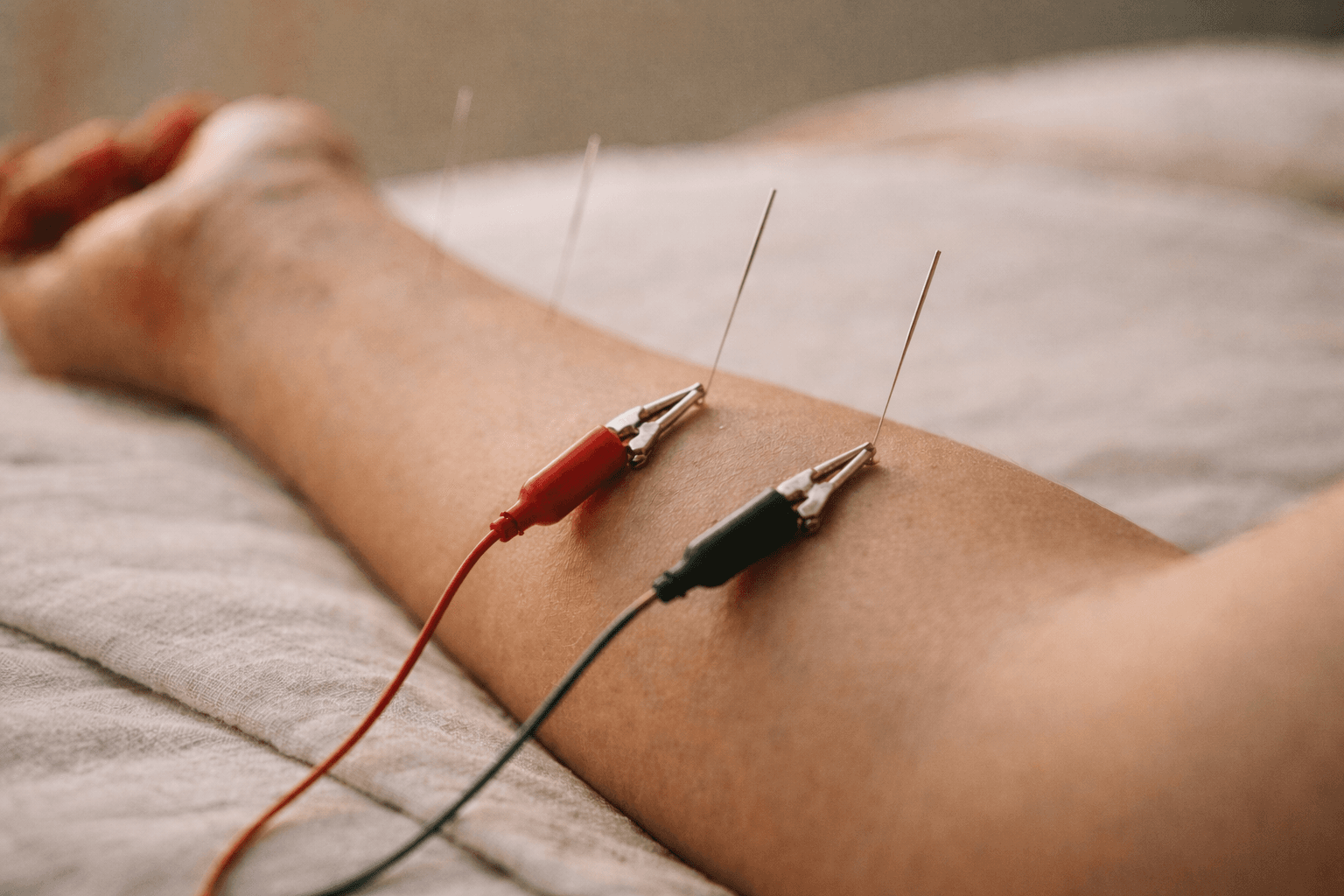
NCCIH defines electroacupuncture as fine needles stimulated with small electrical currents. At Whole Healthy Family, Dr. Perry Levenson uses that method. The practice describes a mild signal that can be directed to the knees, hips, neck, or back.
Use that as a description of technique. It is not evidence that electricity outperforms ordinary needling for every arthritic knee. The osteoarthritis research NCCIH summarizes is about acupuncture as a whole, not a finding that electro-acupuncture is the stronger knee treatment. If it is suggested after a consult, that is because of your exam and history. If it is not suggested, that is a complete answer.
Dr. Levenson is a licensed acupuncturist in Connecticut and New York. The practice site lists a doctorate in acupuncture and Chinese medicine and national board certification in acupuncture and Chinese herbal medicine. Herbal formulas are sometimes used between visits. This article does not claim herbs treat knee arthritis. Ask if they are relevant for you. Do not stop a prescribed medicine because you booked acupuncture.
Planning a visit
Whole Healthy Family offers appointments at 141 Mount Pleasant Rd, Unit 3, Newtown, CT 06470 and at our Harrison, NY office. Check the location pages for directions and confirm available appointment times when booking.
A consult starts with a health history: what hurts, what you have tried, diet, lifestyle, and relevant family history. He says whether acupuncture looks useful. Treatment often begins the same day if you decide to go ahead. The practical side of the room is in what to expect at a first acupuncture visit.
Bring which knee, what walking and stairs are like, whether pain wakes you, and the names of medicines or injections you have used. There is no honest session count before someone has heard that history. For general timing across conditions, see how long acupuncture takes to work. Treat it as background, not a knee forecast. If the visits are not helping, the plan should be reconsidered out loud.
The practice is private-pay and does not bill insurance. Documentation for an out-of-network claim is available. See fees, insurance and scheduling, and call for current prices.
Discussing your next step
Electro-acupuncture is a tool this clinic uses for knee pain that has already been framed as arthritis. It may help some people with pain. It should not delay care for a knee that needs a physician now, and it should not be sold as a way to avoid the rest of osteoarthritis treatment.
Learn about electro-acupuncture, Dr. Perry Levenson’s background, and planning your first visit.
Book a consult: whole-healthy-family.acubliss.app
Or call: (914) 584-6995
Frequently asked questions
Is electro-acupuncture better than regular acupuncture for an arthritic knee?
No guideline cited here says electricity is required. NCCIH defines electroacupuncture as needles used with a small current. This clinic uses it when an assessment supports it. Osteoarthritis research summarized by NCCIH is about acupuncture in general, and the advantage over sham needling is modest. It does not rebuild the joint.
Can acupuncture replace exercise, medicine, or a surgery conversation?
No. NCCIH's summary of a 2019 rheumatology guideline conditionally recommends acupuncture as one option for knee osteoarthritis. Exercise and the rest of your medical plan stay in place. Do not change a prescribed medicine based on this page. A consult is where you ask whether acupuncture is a reasonable add-on.
Who should see a physician before booking?
Anyone with a knee that is newly hot, swollen after injury, locking, or giving way. Acupuncture is not emergency care and not imaging. It is also a poor fit if you want a promise that the joint will be restored. The consult is about whether pain care here makes sense, not about reversing arthritis.
When is the Newtown office open?
Visit our Newtown location page for the address and directions. Confirm available appointment times when booking.
Do you bill insurance for knee treatment?
No. The clinic is private-pay. Ask for documentation if you will file an out-of-network claim or use a health savings account. Reimbursement is not guaranteed. The visit fee is quoted by phone.