Warm water benefits: what Chinese medicine gets right (and what science now confirms)
Chinese medicine has told patients to drink warm water for two thousand years. Here's the TCM reasoning, what modern research actually shows, and how to put it into practice.

Dr. Perry Levenson, DACM, L.Ac.Apr 21, 2026
Updated Oct 01, 2026
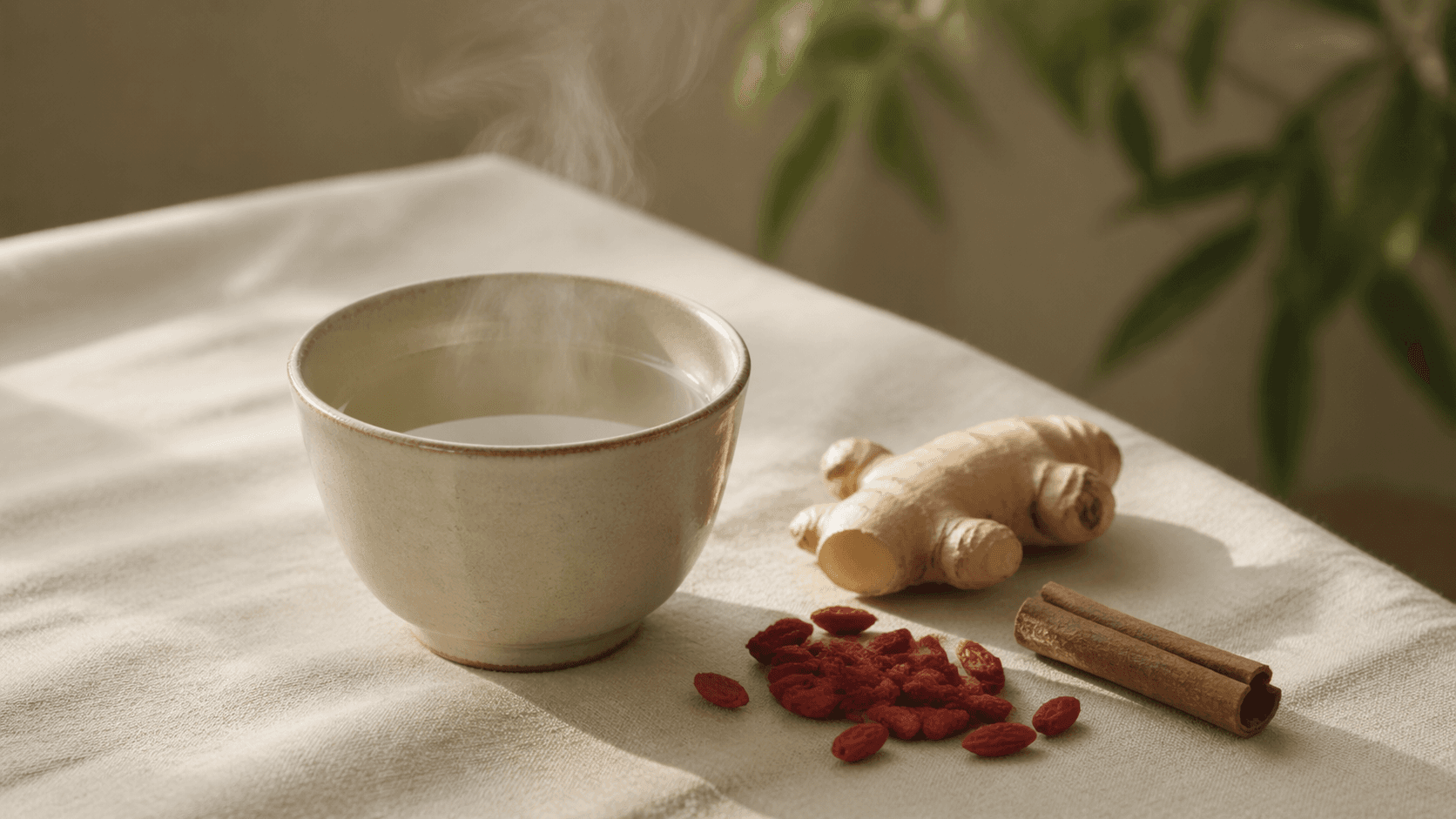
Overview: Warm water benefits your digestion in ways that Chinese medicine has described for two thousand years and modern research has started to confirm. TCM views warm water as fuel for the Spleen and the "digestive fire." Modern studies show warm water moves through the stomach faster, relaxes the esophagus, and can help bowel movements. The practical rule is simple. Drink water at body temperature or a little warmer, most of the time, especially around meals.
The warm-water trend keeps cycling through social media like it's a new discovery. It isn't. Chinese medicine has been telling patients to drink warm water since long before anyone had a thermometer. What's changed recently is that Western research has caught up enough to give us a clearer picture of which warm water benefits are real, which are overstated, and why temperature matters at all.
This post walks through both sides. The classical Chinese medicine reasoning about Spleen qi, digestive fire, and dampness. Then what modern gastroenterology actually shows about water temperature, gastric motility, and the esophagus. You'll finish with a practical rule of thumb you can use tomorrow morning.
If you've ever felt bloated after an ice-cold drink with a meal, or sluggish after a summer salad and iced coffee, the explanation may not be as exotic as it sounds.
What does Chinese medicine say about drinking warm water?
Chinese medicine recommends warm water because cold drinks are thought to weaken the Spleen, the organ system that governs digestion. Warm water supports the "digestive fire" the Spleen needs to break food down efficiently. The guideline is simple. Keep most of what you drink at body temperature or a little warmer, especially around meals.
This isn't about superstition. It's about how classical Chinese medicine thinks about digestion at all. The Spleen and Stomach, in TCM, work together like a pot on a stove. They cook, separate, and transform what you eat into usable energy, or qi. Cold food and drink lower the temperature of that pot. The fire has to work harder to recover before digestion can proceed.
When the Spleen is chronically overwhelmed by cold, TCM describes the pattern as "dampness" accumulating in the body. In the clinic, that usually shows up as bloating, loose stools, a heavy feeling, fatigue after meals, and a coated tongue. A review in the journal Medicines on Spleen qi and gut dysbiosis notes that many of these TCM patterns overlap with what modern medicine would call functional digestive disorders and disrupted gut microbiota.
What is "digestive fire" and why does temperature matter?
The Spleen, in Chinese medicine, isn't the same organ Western medicine talks about. It's a functional system that covers what most people would call digestion, nutrient absorption, and energy production. Its job is to take what you eat and drink and turn it into qi and blood.
For that work to happen, the Spleen needs warmth. TCM teaches that the "fire" of the Middle Burner, roughly the area between the diaphragm and the navel, has to stay strong for digestion to be clean and efficient. Cold drinks, raw salads, iced smoothies, and ice cream all pull heat out of this zone. The system has to spend energy re-warming before it can do anything else.
Stress, overwork, and irregular meals compound the problem. The classical picture of a patient with weak Spleen qi is someone who skips breakfast, works through lunch at a desk, has a cold salad for dinner, and wonders why they're exhausted and bloated. The pattern is a Chinese medicine diagnosis your grandmother would have recognized without needing a name for it.
Warm water, by contrast, is the simplest way to support the Middle Burner all day. It doesn't cost the system anything. It arrives at roughly the temperature digestion wants to work at. The Spleen doesn't have to warm it first.
What does modern research say about warm water benefits?
Modern research shows that water temperature genuinely affects how your upper digestive tract behaves. Warm water moves through the stomach faster, relaxes the lower esophagus, and may help stimulate bowel movements. The effects are modest but consistent, and they line up with what Chinese medicine has described for centuries.
The clearest evidence is on gastric motility. A study in the European Journal of Nutrition had healthy young men drink 500 mL of water at 2°C, 37°C, or 60°C. The stomach emptied faster after the 60°C water, and gastric contractions over the following hour were higher than in the cold-water group. An older study on meal temperature found that cold drinks emptied from the stomach more slowly than warm ones.
The esophagus responds to temperature too. Research on patients with achalasia, a disorder of esophageal motility, found that warm water reduces lower esophageal sphincter resting pressure, helps the sphincter relax, and shortens esophageal contractions. Cold water did the opposite, increasing pressure and prolonging contractions.
Age matters too. A 2023 study in Temperature found that hot drinks sped up gastric emptying in older adults, a group that often deals with slower digestion to begin with.
Not every claim about warm water holds up. The Cleveland Clinic points out that hydration itself matters more than temperature for most people. But the evidence for targeted digestive benefits is real enough that gastroenterologists increasingly mention it as reasonable advice.
Can warm water really help with digestion and constipation?
Warm water can help with both, especially first thing in the morning. The warm fluid stimulates the gut, softens stool, and triggers the reflex that moves things along. Small studies in postoperative patients and people with chronic constipation show measurable improvement, though warm water is a complement to fiber, movement, and hydration, not a replacement.
A randomized controlled trial on bowel movements after laparoscopic gallbladder surgery found that warm water intake helped restore bowel function earlier than standard care. That matches a practical tool TCM practitioners have used forever. A mug of warm water before breakfast, sipped slowly, is one of the oldest constipation remedies in the tradition.
The morning window matters in Chinese medicine for another reason. The Chinese medicine body clock places the large intestine's peak activity between 5 and 7 AM, and the stomach's between 7 and 9 AM. Warm water in that window is landing at the hours the digestive system is naturally most active.
Not everyone needs a dramatic morning ritual. For many patients, simply swapping iced drinks for warm ones at meals is enough to notice less bloating within a couple of weeks. Patients often describe it as feeling lighter after meals, or not needing to lie down afterward.
How warm is "warm enough"? Timing and temperature
"Warm water" in TCM isn't boiling. It's closer to body temperature, roughly 35 to 50°C (95 to 122°F). A good benchmark is that it should feel comfortable, not hot, on your lip. Anything hotter than about 60°C (140°F) risks burning tissue in the mouth and esophagus, which multiple sources flag as a real concern.
Research linking very hot beverages to esophageal cancer risk suggests capping drinks below that upper line. The point of warm water is not heat. It's the absence of cold.
Timing is the other lever. A few practical guidelines:
- On waking: Sip a mug of warm water before coffee or food. It primes the gut and supports a morning bowel movement.
- Around meals: Drink warm or room-temperature water with food. Skip the ice. This is the single most impactful habit for most patients.
- Between meals: Stay hydrated with warm or room-temperature water. Herbal teas count.
- Before bed: A small mug of warm water, plain or with a slice of ginger, is a gentle wind-down.
Total fluid still matters. The National Academies and NIH recommend roughly 13 cups of fluid a day for men and 9 for women, adjusted for activity and climate. Warm water vs cold water in Chinese medicine is a preference about quality. The quantity still has to be there.
Who benefits most from drinking warm water?
Anyone can drink warm water safely, but certain patterns respond most. People with slow digestion, frequent bloating, chronic constipation, cold hands and feet, or a history of heavy iced-drink use are the most likely to notice a difference. Older adults, postoperative patients, and anyone recovering from illness also tend to see clear benefits.
In TCM terms, patients described as having "Spleen qi deficiency" or "internal cold" are the classic candidates. In modern terms, that cluster often includes functional dyspepsia, IBS-C, and the vague "off" stomach that every test comes back normal on.
Women during menstruation frequently find warm water eases cramping, which aligns with the TCM view that cold in the lower abdomen worsens stagnation. Athletes and anyone working outside in heat may need a mix. Cold water has its place during hard exercise because it pulls heat out of the body. The point isn't to never drink cold. It's to stop treating icy as the default.
If symptoms are mild and habits are the main issue, warm water alone often moves the needle. If symptoms are chronic, warm water is a useful support while you work on the underlying pattern with a practitioner.
When warm water isn't enough
Warm water is one of the smallest, cheapest interventions in Chinese medicine. Sometimes that's all you need. Other times it's a clue the system is asking for more help than a mug can offer.
Persistent bloating, digestion that feels off for months, constipation that outlasts dietary changes, fatigue after meals that doesn't lift, cold that sits in your hands and feet no matter the season. These are patterns a full Chinese medicine assessment can read. Treatment usually combines acupuncture for digestive health, herbal formulas chosen for your specific pattern, and simple lifestyle shifts like the warm-water habit. The pieces work together.
The good news is that patients often feel the difference quickly. A Spleen that's been cold for years can warm up in weeks, not months, when the inputs change. Warm water is the first input most practitioners recommend because it's free and it works.
Start with the small habit that's easy to keep
Warm water isn't a cure-all. It's a tiny, ancient, low-cost habit that does exactly what TCM has said it does and lines up with what modern research is slowly confirming. Start with a mug on waking. Keep cold drinks out of meals. Watch what shifts over two weeks.
If bloating, fatigue, constipation, or slow digestion have been part of your baseline for a while, there's usually a bigger pattern worth looking at. At Whole Healthy Family, we read those patterns every day and build treatment plans around them. Book your first appointment and let's figure out what your body is asking for.
Frequently asked questions
Is it better to drink warm or cold water?
For most people, warm water is easier on digestion, especially around meals. Research on gastric motility shows warm water empties from the stomach faster and produces more gastric contractions than cold water. Cold water is fine during intense exercise or in hot weather, but it isn't the ideal default.
What temperature is ideal for drinking warm water?
Aim for 35 to 50°C, roughly 95 to 122°F. It should feel comfortable on your lip, warm but not hot. Avoid water above 60°C (140°F), since very hot drinks have been linked to esophageal irritation and cancer risk. The goal is the absence of cold, not the presence of heat.
Does warm water help you lose weight?
Not dramatically, and claims that it "melts fat" are overstated. Research does suggest that water temperature affects gastric motility and appetite signals. Drinking warm water around meals may help you feel satisfied with less food, but the bigger weight factors are total calories, protein, sleep, and movement.
Should I drink warm water on an empty stomach in the morning?
Yes, if it works for you. A study on warm water for constipation found clear benefits for bowel function. Chinese medicine adds that the large intestine's peak window is 5 to 7 AM, so morning warm water aligns with the body's natural rhythm. Sip, don't gulp, and give it 20 minutes before coffee or food.
Can drinking cold water damage your digestion?
Damage is a strong word, but cold water does slow gastric emptying and tighten the esophagus, according to research on esophageal motility. For people with functional digestive issues, IBS, or slow digestion to begin with, that can make symptoms worse. For most healthy adults, occasional cold water is fine. The Chinese medicine concern is habitual, meal-with-ice patterns, not the occasional glass.