Chinese herbal medicine for menopause: what actually helps
Chinese herbal medicine offers one of the most research-backed non-hormonal paths for managing menopause symptoms. Here's what it actually helps with, what the evidence shows, and how Dr. Perry Levenson approaches this kind of care.

Dr. Perry Levenson, DACM, L.Ac.Apr 20, 2026
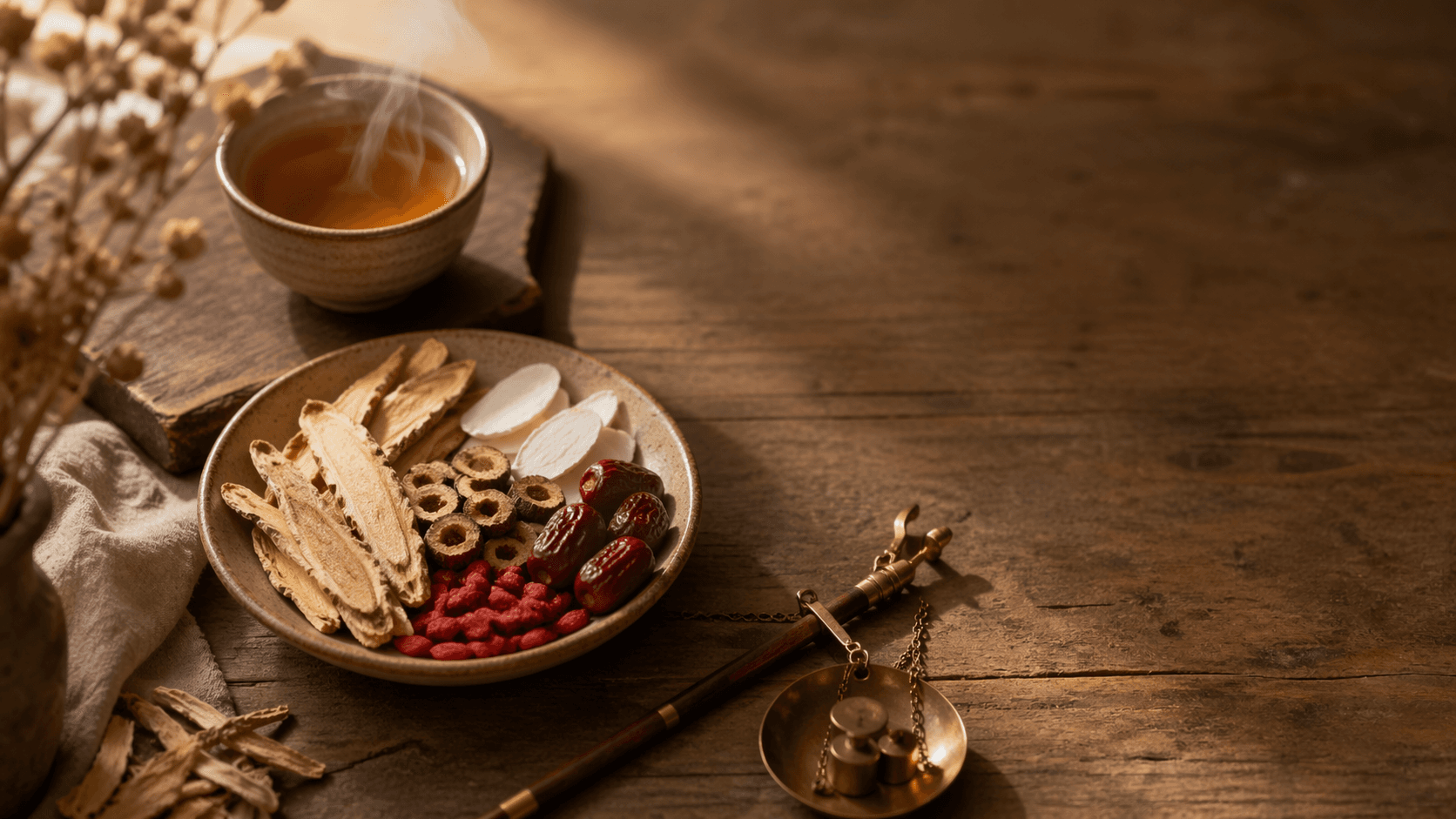
Overview: Chinese herbal medicine for menopause uses custom multi-herb formulas to ease hot flashes, night sweats, disrupted sleep, and mood changes. The most studied formula, Er Xian Tang, has produced effects comparable to hormone therapy on key measures in controlled trials. It's especially relevant for women who can't or don't want HRT. Safety depends almost entirely on board-certified prescribing, careful sourcing, and a full review of your current medications.
Chinese herbal medicine for menopause is one of the most common reasons women in their 40s and 50s reach out to our practice. The hot flashes that won't quit. The 3 a.m. wake-ups. The mood shifts that don't feel like you. Around 80% of women experience vasomotor symptoms during the menopause transition, and for many, those symptoms last far longer than they expected. The Study of Women's Health Across the Nation found a median duration of 7.4 years for frequent hot flashes, with some women living with them for over a decade.
Meanwhile, hormone replacement therapy use has fallen sharply, from roughly 22% of women 40 and older in 1999 to about 5% by 2010, driven by safety concerns that still shape patients' decisions today. Many women want something that helps, without a prescription they're uncomfortable with.
This post walks through what Chinese herbal medicine actually offers for menopause: which symptoms respond best, what the research shows, when it makes sense as an alternative to HRT, and what to ask a practitioner before you start.
What is Chinese herbal medicine for menopause, and how does it work?
Chinese herbal medicine for menopause uses custom multi-herb formulas, not single supplements, to ease the imbalances driving hot flashes, sleep problems, and mood shifts. A practitioner matches several herbs to your specific pattern, then adjusts the formula as your body responds.
The formulas work differently from Western single-herb products like black cohosh. Classical menopause formulas combine warming herbs that address fatigue and coldness with cooling herbs that clear the heat behind hot flashes, all in one prescription. The National Center for Complementary and Integrative Health notes that TCM practitioners almost always use compound formulas of two or more herbs, which is one of the system's distinguishing features.
Two women the same age with the same hot flashes might get very different formulas. One runs hot, wakes up sweating, and feels wired. Another feels cold, tired, and emotionally flat. Western care often reaches for the same solution. Chinese medicine builds around what's actually happening underneath. If you want the full picture of how formulas are structured, our deep dive on how Chinese herbal formulas work walks through it step by step.
Which menopause symptoms respond best to Chinese herbs?
The strongest response tends to be with hot flashes and night sweats. Sleep disruption, mood changes, anxiety, fatigue, and joint aches also improve for many patients. Research supports each of these uses, though the degree of response varies from person to person.
Here's what the clinical picture looks like:
- Hot flashes and night sweats. A systematic review and meta-analysis of 19 randomized trials covering 2,469 women found that Chinese herbal formulas reduced the severity of hot flashes compared with placebo, and performed comparably to hormone replacement therapy on effectiveness rate, quality of life, and total menopause symptom score.
- Sleep. Insomnia is one of the most disruptive menopause symptoms. A meta-analysis of 15 trials on acupuncture combined with Chinese herbal medicine for perimenopausal insomnia found meaningful improvement in sleep quality. Our acupuncture for sleep disorders page covers how this kind of layered care unfolds.
- Mood and anxiety. Mood shifts are one of the most under-treated menopause symptoms. Herbs can steady the nervous system between sessions, and acupuncture for anxiety and mood is often added to the plan for women who want a non-medication route.
- Joint aches and fatigue. These often move together with hormone shifts. Formulas designed to nourish the underlying pattern tend to reach both at once.
Not every symptom responds at the same pace. Hot flashes often shift within a few weeks. Sleep and mood sometimes take longer. Dr. Levenson will tell you up front what a realistic timeline looks like for your situation.
The most studied formulas: Er Xian Tang and its modern descendants
Several classical formulas have been studied specifically for menopause. The best known is Er Xian Tang, developed in the late 1950s at the Shanghai University of Traditional Chinese Medicine and still one of the most prescribed menopause formulas in clinical practice today.
Er Xian Tang combines warming tonics with cooling herbs in a single prescription. The design is deliberate: warm the body's deeper reserves that have been drained by years of hormone shifts, while clearing the "empty heat" that shows up as flushing and night sweats. In a randomized, double-blind, placebo-controlled trial of 108 perimenopausal women in Hong Kong, the formula significantly reduced the frequency and severity of hot flushes compared with placebo over 12 weeks.
Other formulas come up often in clinical practice:
- Danggui Buxue Tang. A simpler two-herb formula built around dang gui and huang qi. A clinical review in the Journal of Menopausal Medicine found it helped relieve menopausal symptoms with a favorable safety profile and no significant changes in hormone levels.
- Dang Gui Shao Yao San. Used for women whose menopause includes heavy fatigue, fluid retention, and digestive sluggishness.
- Liu Wei Di Huang Wan. A foundational kidney-nourishing formula, often layered in when symptoms include bone aches, night sweats, and dry skin.
The choice isn't about matching a diagnosis to a formula from a book. Clinical perspectives on TCM menopause care emphasize that the pattern underneath each woman's symptoms is what should drive the prescription, not the diagnosis alone. That's why the first visit is long and the formula gets adjusted over time.
What does the evidence actually show?
The evidence for Chinese herbal medicine in menopause is strongest for hot flash reduction, where multiple randomized trials show formulas outperform placebo and compare favorably to hormone therapy on key measures. Evidence is moderate for sleep and mood. Long-term safety data in Western populations is still limited.
A few honest comparisons are worth making. Western herbal care for menopause has largely focused on single herbs like black cohosh. The National Center for Complementary and Integrative Health concluded that studies on black cohosh have had inconsistent results, and a 2012 review found the evidence wasn't strong enough to recommend it for menopause symptoms. Chinese formulas, because they combine multiple herbs in careful proportions, often hold up better in head-to-head trials than any single herb on its own.
At the same time, the research has limits. Many trials come from China, where study quality varies. Sample sizes in the strongest trials are still in the hundreds, not the thousands. And "menopause" in these studies usually means hot flashes and sleep disturbance, not the full range of longer-term concerns like bone health.
Dr. Levenson prescribes formulas where the pattern and the evidence both support it, and he'll tell you directly when they don't. The goal isn't to replace conventional care when HRT is appropriate. It's to offer a real option to women who need or want something different.
When Chinese herbs make sense, especially if HRT isn't an option
For many women, HRT is the right choice, and we'll say so. The American College of Obstetricians and Gynecologists considers hormone therapy the most effective treatment for moderate to severe vasomotor symptoms in appropriate candidates. But HRT isn't available or advisable for every woman.
Chinese herbal medicine becomes especially worth considering in a few situations:
- Breast cancer history. Women who've had hormone-sensitive cancers are often told HRT is off the table. Chinese formulas work through mechanisms distinct from direct estrogen replacement, and many integrative oncology programs include them in supportive care plans.
- Blood clot or cardiovascular risk. Personal or family history of clots, stroke, or certain cardiovascular conditions can rule out systemic HRT.
- Personal preference. Some women have read the research and simply don't want to take hormones. That's a valid starting point, and it deserves a real alternative rather than being dismissed.
- Partial relief on HRT. A smaller group of patients are on HRT and still dealing with sleep disruption, mood changes, or joint aches. Herbs can fill that gap.
- Early perimenopause. Many women in their 40s are too early for HRT in the eyes of their primary care doctor, but already symptomatic. Herbs can hold the line during that window.
The first visit is where we sort out which of these applies to you, and whether Chinese herbal medicine is the right tool for what you're actually dealing with.
How Chinese herbs work alongside acupuncture for menopause
Acupuncture and Chinese herbal medicine are two tools from the same system, and they reach different layers. Acupuncture shifts the nervous system and circulation during a session. A hot flash cools. The jaw unclenches. Sleep deepens that night. Herbs extend that work between sessions and reach patterns that benefit from steady, daily support.
For menopause, this combination is often where the real durability comes from. A woman might come in with hot flashes disrupting her sleep several nights a week. Acupuncture starts to soften them inside a few visits. An herbal formula, taken daily, helps keep them softer between treatments and reduces the underlying heat and dryness that fuel them. Over a few months, what was a nightly problem quiets into something manageable.
Not every patient needs both. Some do beautifully on acupuncture alone. Others get further with herbs added in. Dr. Levenson usually watches how your body responds to acupuncture first, then adds a formula when it's clear the herbs will add something real to the plan.
Is it safe, and what should you ask a practitioner?
Chinese herbal medicine has a strong safety record when prescribed by a board-certified practitioner using quality-controlled herbs. The real risk isn't usually the herbs themselves. It's drug-herb interactions, product quality, and whether the person writing the prescription has actual training in both systems.
A few specifics worth knowing for menopause care:
- Drug-herb interactions are real. Many women in their 40s and 50s are on medications for blood pressure, thyroid, mood, or sleep. Memorial Sloan Kettering's integrative medicine monograph on Dang Gui Bu Xue Tang, one of the most studied menopause herbs, specifically flags interactions with anticoagulants. A full medication review isn't optional.
- Source and quality matter. The NCCIH's overview of menopausal complementary approaches notes that herbal product quality varies widely on the consumer market. Dr. Levenson uses pharmaceutical-grade suppliers with third-party testing, not supplement-aisle products.
- Credentials are the single most important safety factor. Ask whether your practitioner holds NCCAOM board certification in Chinese Herbology, distinct from acupuncture. Ask where their herbs are sourced. Ask how they screen for interactions with your specific medications. Good practitioners welcome these questions.
Side effects, when they appear, are usually mild: loose stools as a formula takes hold, a taste issue, or minor digestive shifts. These resolve quickly or the formula is adjusted. Serious adverse events from professionally prescribed Chinese herbs are uncommon, but they're only uncommon in skilled hands.
The bottom line
Menopause isn't something to power through until it ends. For many women, it lasts the better part of a decade, and the symptoms are real. Chinese herbal medicine offers one of the most research-backed non-hormonal paths through it, especially for women who can't take HRT, don't want to, or want a layered plan that reaches more than one symptom at a time.
The key is who's prescribing. A board-certified herbalist who reviews your full medication list, sources high-quality formulas, and adjusts your prescription as your body responds is a very different experience from pulling a bottle off a shelf.
If you've been looking for a real alternative, or a complement to the care you're already getting, the first step is a conversation. Book your first appointment at Whole Healthy Family and let's see what a plan built around your specific situation could look like.
Frequently asked questions
How long does Chinese herbal medicine take to work for menopause symptoms?
It depends on the symptom. Hot flashes and night sweats often ease within two to four weeks. Sleep and mood can take four to eight weeks to show meaningful change. Deeper patterns like fatigue, joint aches, or long-standing perimenopausal mood shifts usually improve over the course of two to three months. Dr. Levenson gives you a realistic timeline at your first visit and adjusts the formula based on how your body responds.
Can I take Chinese herbs if I'm a breast cancer survivor?
Often yes, with care and coordination. Chinese formulas for menopause work through different mechanisms than direct estrogen replacement, and many integrative oncology teams include them in survivorship care. That said, specific herbs and combinations need to be chosen carefully around your cancer history and current medications. Dr. Levenson works within whatever parameters your oncology team has set and will tell you directly when an herbal approach isn't appropriate.
Will Chinese herbs affect my hormone levels?
Most well-studied menopause formulas don't produce measurable changes in estrogen or FSH levels in blood tests. The systematic review of 19 trials found Chinese herbal medicine reduced symptoms without significantly shifting hormone levels compared with placebo. The effect appears to come from other pathways, including the nervous system and blood flow regulation, which is part of why safety looks different from HRT.
Can I combine Chinese herbal medicine with HRT?
Sometimes yes. Some women on HRT still deal with disrupted sleep, mood changes, or joint aches, and herbs can fill that gap. The formula has to be chosen with your HRT in mind, and your primary care doctor or gynecologist should know what you're taking. Dr. Levenson coordinates with your other providers when that's the right approach.
What does Chinese herbal treatment for menopause typically cost?
Whole Healthy Family is a private-pay practice and doesn't bill insurance directly for herbs or visits. Some patients submit claims for partial out-of-network reimbursement or use HSA or FSA funds to cover costs. Pricing is straightforward and available when you call, and Dr. Levenson will walk you through what a typical three-to-six month plan looks like so you're not guessing about the commitment.